Share the post "4 questions to Marie-Caroline Chaudruc from the Château de Montsoreau"
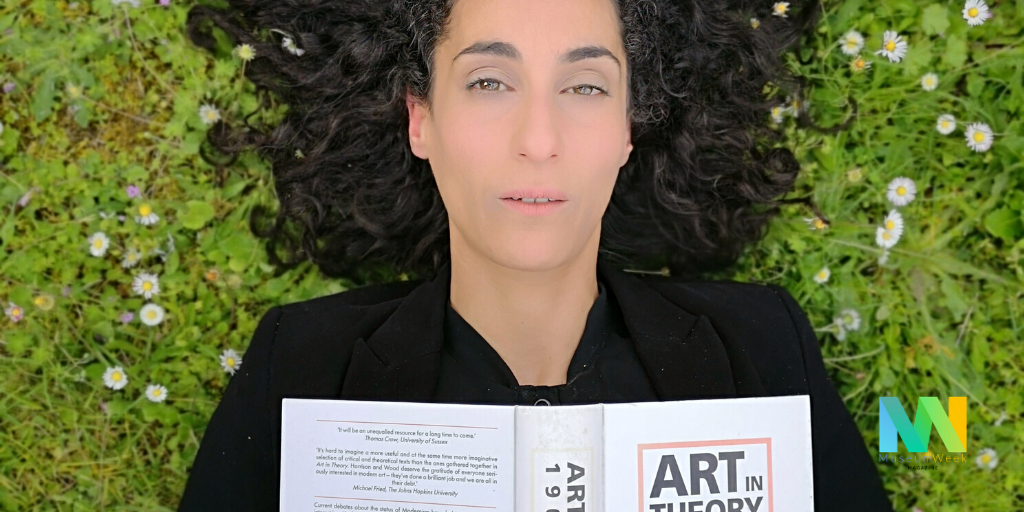
Marie-Caroline Chaudruc, Director of Château de Montsoreau – Museum of Contemporary Art. Photography © Marie-Caroline Chaudruc
1.What is your museum about and what it your work there?
Our museum is a kind of ghost ship. Its setting is in a historic castle once surrounded on all sides by the waters of the Loire river, moored on the bank for an uncertain length of time, in search of something or someone.
In Wagner’s opera, the Flying Dutchman, which could well be art itself, is on a frantic quest. Cursed, he wanders the seas and valiantly faces the raging elements, sometimes downhearted and sometimes full of hope.
Every seven years, he docks to seek the one whose faithfulness will end his curse and whose love will grant him salvation. Like the Flying Dutchman, our visitors are actors in their own quest, and if they find what they came for in the museum, I suppose that we have done a good job.
Sometimes an encounter, however unexpected, allows us to hope for what we did not dare to glimpse.
2.How is your museum dealing with the coronavirus crisis?
We’re not in crisis. Our museum continues its activity, supports artists, maintains its cultural program and exhibitions, and proposes mediation actions. If there is a crisis, it is sanitary, economic, political but not artistic. Art goes on and will go on. No virus can kill Art.
In Christ stopped at Eboli, Carlo Levi, arrested for his antifascist positions, tells of his long confinement in a small town in southern Italy. In this desolate countryside where all activity is forbidden to him, in this forced solitude where every day seems like an eternity, he will write his greatest masterpiece and become another man.
After having hated it, he becomes so attached to the village of Aliano that he hesitates to leave the day he is released from his confinement and asks to be buried there after his death.
3.What is the impact on your digital activity? Do you have tips to share with your colleagues?
We considered digital as a tool: vector of information and instrument of communication. At the beginning of March our world changed and we closed the museum. Michael Baldwin and Mel Ramsden (Art & Language) then proposed to me that their exhibition Home from Home be held in people’s homes. I thought it was a fantastic idea, because by creating a new proximity between the public and the works of art, it allows us to question the legitimacy of the museum.
They have designed an exhibition that is entirely printable. The exhibition offers the public the possibility of physically confronting the work of art, participating in its installation, thinking about it in its relationship to the space and the surrounding objects, something that until now has been the preserve of professionals (curators, collectors) and institutions (museums, art galleries).
Digital has simply been used as an artistic support, and as a means of transport to bring works of art directly to people’s homes. This is the fourth year that we’ve participated in Museum Week. It is one of the digital initiatives that affirm that art is both a common good and a gateway to question the major issues of our time such as the environment, living together, new technologies or education.
4.Are you already preparing yourself fot the reopening? Tell us in what way.
We do not yet know when and under what conditions museums will be able to reopen. Beyond the respect of hygiene measures, social distancing measures and barrier gestures, we are currently thinking about the best way to manage peak days while protecting our visitors. This raises many questions and several scenarios are being studied, taking into account the gauge inside the exhibitions rooms and the circulation of the public within the museum space.
From 11 May, which will mark the lockdown easing and the launch of #MuseumWeek, we will be setting up a takeaway service called Muséodrive. A drive installed in front of the museum will allow our visitors to get an exhibition kit without getting out of their car. This context of lockdown easing will create a demand, and it is our responsibility to respond to it.
Interview by Fabio Pariante, journalist
MORE
Château de Montsoreau on social networks: Instagram – Facebook