
Share the post "The importance of empathy, art and family affection. Interview with artist Francesca Leone"
“About 15 years ago, I started giving a different value to abandoned things and my first exhibition on this theme was ‘Our Trash’ at the Milan Triennale”. Thus the contemporary artist Francesca Leone (Rome, 1964), through the use of different media including painting, sculpture, and installations, explores themes such as memory, identity, perception, and sustainability. She began her exhibition activity in 2007 with an exhibition at the Capitoline Museums and her works have been exhibited in various exhibitions and art galleries in Italy and abroad.
Daughter of art, her father is the great director Sergio Leone and her mother is Carla Ranaldi, the prima ballerina of the Teatro dell’Opera di Roma, the works of the artist who graduated from the Rome University of Fine Arts in painting have been exhibited in Italy, but among others also in Singapore, Moscow, Madrid, at the Museum of Contemporary Art in Santiago de Chile, at the MACBA – Museum of Contemporary Art in Buenos Aires and the Museum of the Academy of Fine Arts in St. Petersburg.
In her conceptual and abstract production, Leone has trapped in some works objects that belonged to her family, in particular, her mother; a one-of-a-kind private collection to immortalize memories and gestures that cannot be forgotten. Objects given at the time.
In her studio in Rome, in this interview for MuseumWeek magazine, Francesca Leone tells us not only her passion for art and her innate talent but also some private anecdotes and how important sustainability is for each of us for future generations.
What did the Our Trash exhibition project at the Triennale in Milan consist of?
It consisted of a street made of grids in which I had trapped thousands of small objects: from cigarette butts to old photographs and receipts. The installation was on two levels, one more external with more current things and the other more internal with objects that are no longer used to underline the passage of time.
By walking on it, the project aimed to raise the viewer’s awareness of the importance of daily gestures that we could avoid because respect for nature and the environment depends on a small gesture. Furthermore, I was happy to see many students interacting with the installation.
From your point of view, what does the term “sustainability” mean?
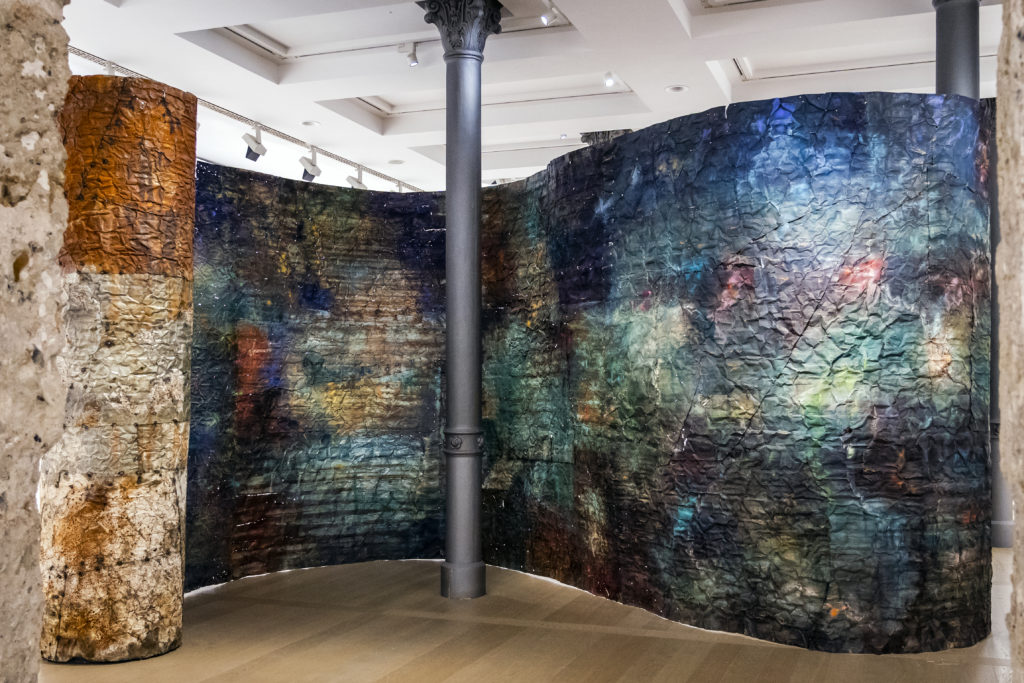
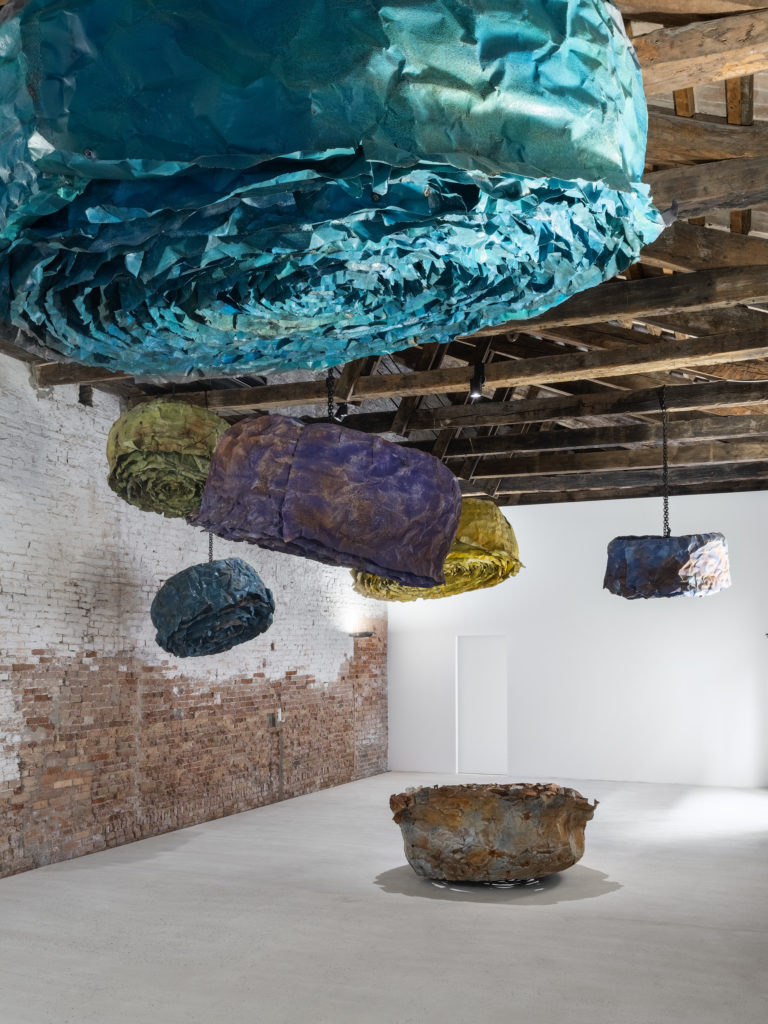
“Sustainability” is giving new life to objects that are somehow thrown away, ruined, and have lost their function. Giving them a more poetic look like a rusty sheet of metal that perhaps covered a shack can become a rose, a flower, a drapery, it can look like paper.
I like working on this dual aspect. Now I’m working with sheet metal from abandoned construction sites and shacks: from rusty iron, they become something different. Behind all this there is naturally the desire to change things, to say: “We can do it!”.
Last year you were appointed Ambassador for Italy to the G20 in India…
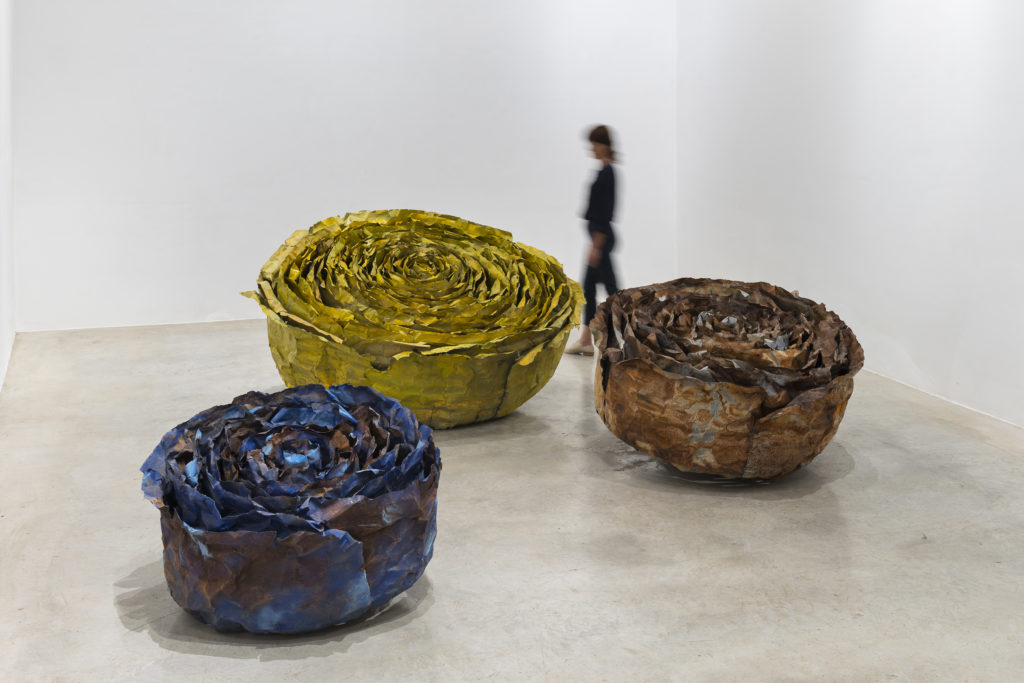
When they asked me to present a project, I thought of Una rosa, è una rosa, è una rosa (A rose, it’s a rose, it’s a rose. Editor’s note: about the meaning of the words of the writer Gertrude Stein in her poem Sacred Emily, 1913).
They are three roses of different colors: one rose was completely painted to cover the rust and the holes, the second still had some rust residues where you could see the wear and the passage of time, and finally the third was completely rusted, so there was no absolutely my intervention. Precisely this last phase makes us understand that we can all do something, we must do something to change the future.
Could we also interpret this process in general as the three phases of life?
Certain! There is youth, maturity, and then old age. But about the environment, my message is to take care of it for future generations and think about what we leave to them. I don’t have children, so I don’t have this burden, but if I had, I would certainly be very worried today.
What is the role of the artist in this aspect?
Some artists feel politics in art and talk about their time, their scars, and their pain. On the other hand, I am sensitive to the issue of the environment, and I started dealing with it when it was not yet so evident, but I am not sensitive to the political one. The artist is far-sighted thanks to his sensitivity. Politics and life make you short-sighted and we can all talk about it, but we need to take action. Do something.
Continue on MuseumWeek Magazine.